100 Objects #25: Beaded Moccasin
A poet uncovers a dark US history connected to her grandmother's beaded moccasin gift, according to 99% Invisible. The moccasin's story reveals a surprising revelation about her grandmother's past.
Original reporting · 99percentinvisible.org
Read “100 Objects #25: Beaded Moccasin” at 99% Invisible →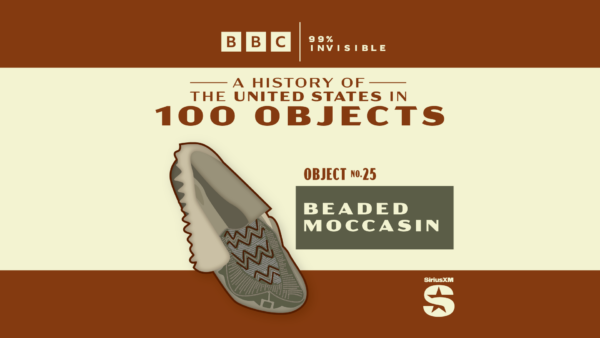
How this was written. CTCV wrote this article with a language model from 99% Invisible’s reporting (model: @cf/meta/llama-3.3-70b-instruct-fp8-fast); it describes that reporting rather than adding to it. The original, linked above, is the full story.
Key points from 99% Invisible’s report
- A pair of beaded moccasins held a special significance for poet Sarah Kay, connecting her to her grandmother's past.
- The moccasins were a gift to Sarah's grandmother, June Suzuki, from a student at a Native American boarding school in the 1940s.
- The story of the moccasins reveals a dark current in US history, connecting the internment camps to the Native American boarding schools.
- The project A History of the United States in 100 Objects explores the stories behind everyday objects like the beaded moccasins.
- The story of the beaded moccasins highlights the importance of preserving and sharing individual stories to understand the past.
Poet Sarah Kay grew up with a pair of beaded moccasins framed on her dining room wall, a gift to her grandmother from a student at a Native American boarding school. The moccasins were a mysterious part of her family's history, with intricate beadwork and soft leather. Sarah's grandmother, June Suzuki, had received the gift while teaching at the school in the 1940s. The moccasins held a special significance, but their story was not fully understood until Sarah started researching her grandmother's past.
June Suzuki's time at the boarding school was a significant period in her life, coming soon after her release from an internment camp for Japanese-Americans during World War II. This experience had a profound impact on her life, and the moccasins were a tangible connection to that time. As Sarah delved deeper into her grandmother's story, she began to uncover a complex and troubling history. The discovery of this dark current in US history was a surprising revelation, one that connected the internment camps to the Native American boarding schools.
The beaded moccasins were more than just a family heirloom; they represented a connection to a larger historical narrative. As Sarah learned more about her grandmother's experiences, she gained a deeper understanding of the complexities of US history. The story of the moccasins and June Suzuki's life became a powerful reminder of the importance of exploring and understanding the past. By examining the stories of individual objects, like the beaded moccasins, a more nuanced picture of history can emerge.
A History of the United States in 100 Objects, a production of 99% Invisible and BBC Studios, explores the stories behind everyday objects like the beaded moccasins. This project aims to reveal the complex and often surprising histories behind ordinary objects, according to 99% Invisible. By sharing these stories, the project hopes to provide a unique perspective on the history of the United States. The story of the beaded moccasins is just one example of the many fascinating objects and stories that make up this history.
As 99% Invisible celebrates its 10th anniversary, the organization continues to produce engaging content, including the story of the beaded moccasins. The project's goal is to create a comprehensive and engaging history of the United States, one object at a time. With the support of donors and listeners, 99% Invisible is able to produce high-quality content and explore new stories. The story of the beaded moccasins is a testament to the power of objects to reveal hidden histories and connect people to the past.
The discovery of the moccasins' story has had a lasting impact on Sarah Kay and her understanding of her family's history. The experience has also highlighted the importance of preserving and sharing individual stories, like that of June Suzuki and the beaded moccasins. By exploring these stories, a more complete picture of US history can emerge, one that is complex, nuanced, and multifaceted. As more objects are explored and their stories revealed, a richer understanding of the past will continue to unfold.
The story of the beaded moccasins serves as a reminder of the significance of individual objects in understanding the past. As 99% Invisible continues to explore the stories behind everyday objects, new insights into US history will emerge. The project's unique approach to history has the potential to engage audiences and inspire a deeper appreciation for the complexities of the past.
Questions and answers
What was the significance of the beaded moccasins for Sarah Kay?
The beaded moccasins were a mysterious part of her family's history and held a special significance for Sarah Kay, connecting her to her grandmother's past.
Where did June Suzuki receive the beaded moccasins?
June Suzuki received the beaded moccasins as a gift from a student at a Native American boarding school where she taught in the 1940s.
What is the project A History of the United States in 100 Objects about?
The project explores the stories behind everyday objects, like the beaded moccasins, to reveal a complex and often surprising history of the United States.