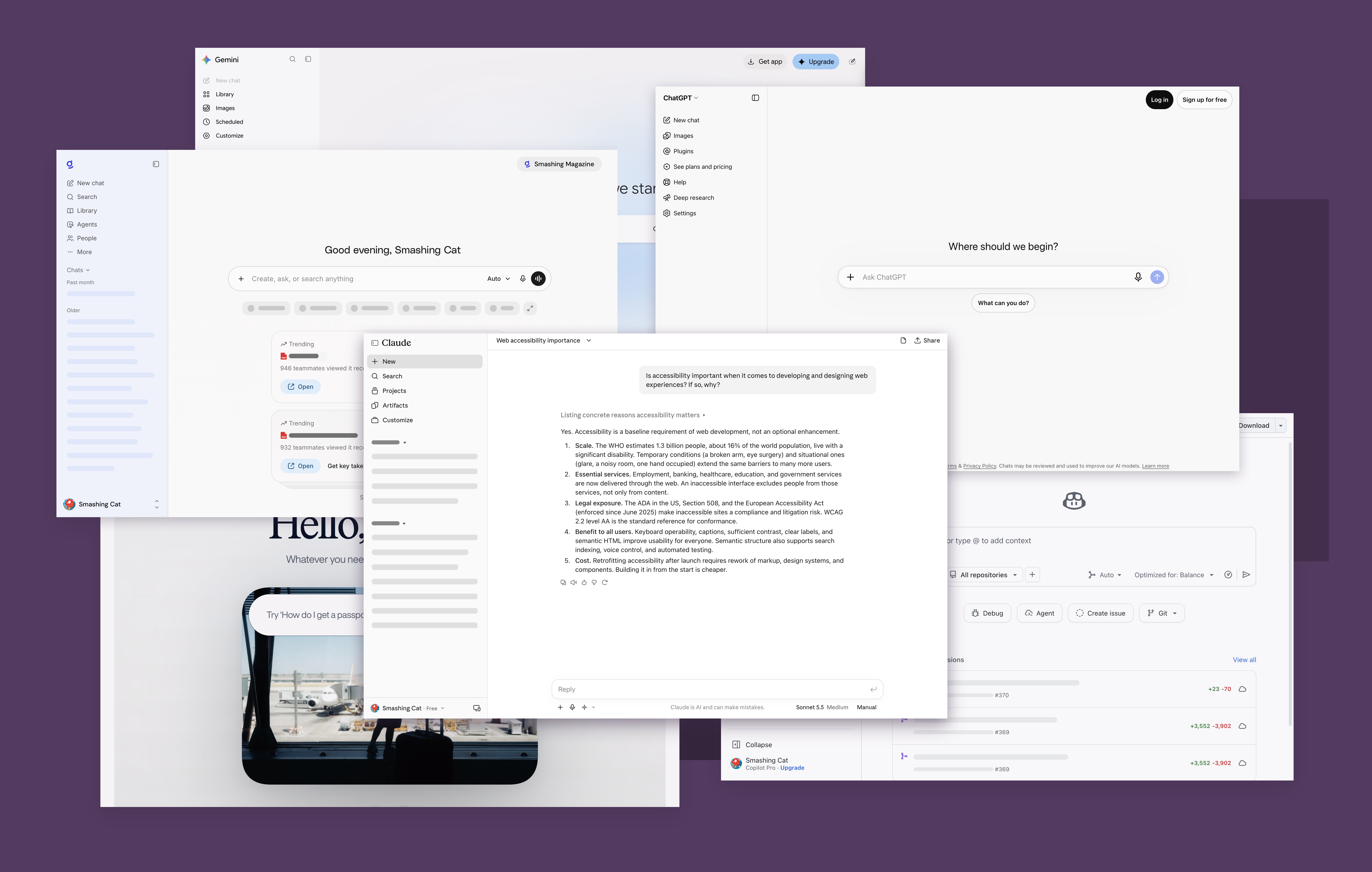
UX Collective Says Native Is Minimum Requirement
Native design is a basic standard, not a goal, according to UX Collective. This matters because it sets a new expectation for design quality.
Original reporting · uxdesign.cc
Original: “Native is a floor, not a ceiling”
Read “Native is a floor, not a ceiling” at UX Collective →
How this was written. CTCV wrote this article with a language model from UX Collective’s reporting (model: @cf/meta/llama-3.3-70b-instruct-fp8-fast); it describes that reporting rather than adding to it. The original, linked above, is the full story.
Key points from UX Collective’s report
- Native design is considered a basic standard, not a goal, according to UX Collective.
- AI has made it possible to achieve a polished look without incurring high costs.
- AI assistants can be used to aid in content creation, but human input is still necessary.
UX Collective reported that native design is a floor, not a ceiling, meaning it is a minimum requirement rather than a goal to strive for. With the help of AI, achieving a polished look no longer requires significant resources.
The use of AI in design has changed the landscape, making it possible to produce high-quality designs without incurring high costs. According to UX Collective, native brings what can’t be drawn, and it moves with the system, one step ahead of what imitates it.
The role of AI in content creation is also highlighted, as an AI assistant was used to help write the article. However, the ideas, experience, and final edit were still the responsibility of the author, indicating a collaborative approach to content creation.
Questions and answers
What does native design being a floor mean?
It means that native design is a minimum requirement, rather than a goal to strive for.
How has AI impacted design?
AI has made it possible to produce high-quality designs without incurring high costs, and it brings what can’t be drawn, moving with the system.