Doktoro Esperanto
L. L. Zamenhof designed Esperanto to unite the world, it remains the most widely spoken constructed language. Esperanto speakers still meet annually to keep the language alive.
Original reporting · 99percentinvisible.org
Read “Doktoro Esperanto” at 99% Invisible →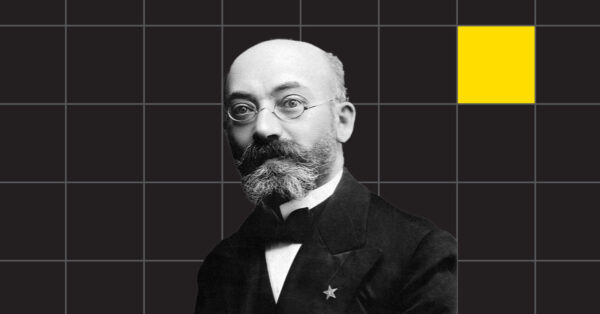
How this was written. CTCV wrote this article with a language model from 99% Invisible’s reporting (model: @cf/meta/llama-3.3-70b-instruct-fp8-fast); it describes that reporting rather than adding to it. The original, linked above, is the full story.
Key points from 99% Invisible’s report
- Esperanto is a constructed language designed to unite the world under one shared tongue.
- The language was created by L. L. Zamenhof, who published the 'Unua Libro' before his 30th birthday.
- Esperanto is the most widely spoken constructed language, with a thriving community of speakers.
- The World Esperanto Congress is an annual event that brings together Esperanto speakers from around the world.
- The language's design is straightforward and consistent, contributing to its enduring popularity.
Esperanto is a constructed language, not attached to a nation or region, and was designed from scratch by L. L. Zamenhof, according to 99% Invisible. Zamenhof, also known as Doktoro Esperanto, created the language to unite the world under one shared tongue. He believed that if the language was easy to learn, it could become a global second language.
Zamenhof was born in 1859 in Białystok, which was part of the Russian empire at the time and is now located on the eastern border of Poland. As a child, he learned several languages, but he dreamed of a way to unite the world through a shared language. Before his 30th birthday, Zamenhof published the 'Unua Libro', which detailed the language's philosophy and design.
The Esperanto movement did not achieve its goal of becoming everyone's second language, but it is still regarded as the most widely spoken constructed language. Every year, Esperanto speakers meet for a convention where nearly everyone in attendance speaks the language. This convention, the World Esperanto Congress, is a testament to the language's enduring popularity.
Reporter Katie Thornton attended the World Esperanto Congress to learn more about the people who are trying to keep the language alive. Her report explores what can be learned from the Esperanto community and their efforts to preserve the language. The congress is an opportunity for Esperanto speakers to come together and celebrate their shared language.
The design of Esperanto is straightforward and consistent, which has contributed to its enduring popularity. The language's simplicity and ease of use were key factors in its creation, as Zamenhof believed that a language should be easy to learn and use. Despite not achieving its goal of becoming a global second language, Esperanto remains an important part of the cultural heritage of its speakers.
The World Esperanto Congress is a unique event that brings together people from around the world who share a common language. The congress is a celebration of the language and its community, and it provides an opportunity for speakers to connect with one another and promote the language. The event is a testament to the power of language to unite people across cultures and borders.
The story of Esperanto and its creator, L. L. Zamenhof, is a fascinating one that highlights the importance of language in shaping our world. As reported by 99% Invisible, the language's history and design are a testament to the power of human ingenuity and the desire to connect with others. The Esperanto community continues to thrive, and their efforts to preserve the language are an inspiration to people around the world.
Questions and answers
What is Esperanto?
Esperanto is a constructed language, not attached to a nation or region, and was designed from scratch by L. L. Zamenhof.
Why was Esperanto created?
Esperanto was created to unite the world under one shared tongue, with the goal of becoming a global second language.
Is Esperanto still spoken today?
Yes, Esperanto is still spoken today, with a thriving community of speakers who meet annually at the World Esperanto Congress.